The Story of Kenyan Tea
Tea from Kenya is found in blends enjoyed across the world, valued for the colour, strength, and brightness it brings to the cup. Yet its origin often goes unnoticed, with many drinkers more familiar with the final blend than with the tea behind it.
Tea cultivation in Kenya began in 1903 in Limuru, in the country’s central highlands. Commercial production followed in the 1920s, particularly around Limuru and Kericho. For many years, tea growing was dominated by large estates, but from the 1950s onwards, the industry expanded significantly and became more inclusive.
The first smallholder tea factory was established at Ragati in Nyeri in 1957. The organisations that later developed into today’s Kenya Tea Development Agency, commonly known as KTDA, played a major role in bringing hundreds of thousands of small farmers into the country’s tea economy. Today, KTDA is owned by approximately 600,000 smallholder tea farmers across Kenya’s tea-growing counties and plays an important role in connecting Kenyan tea with international markets.
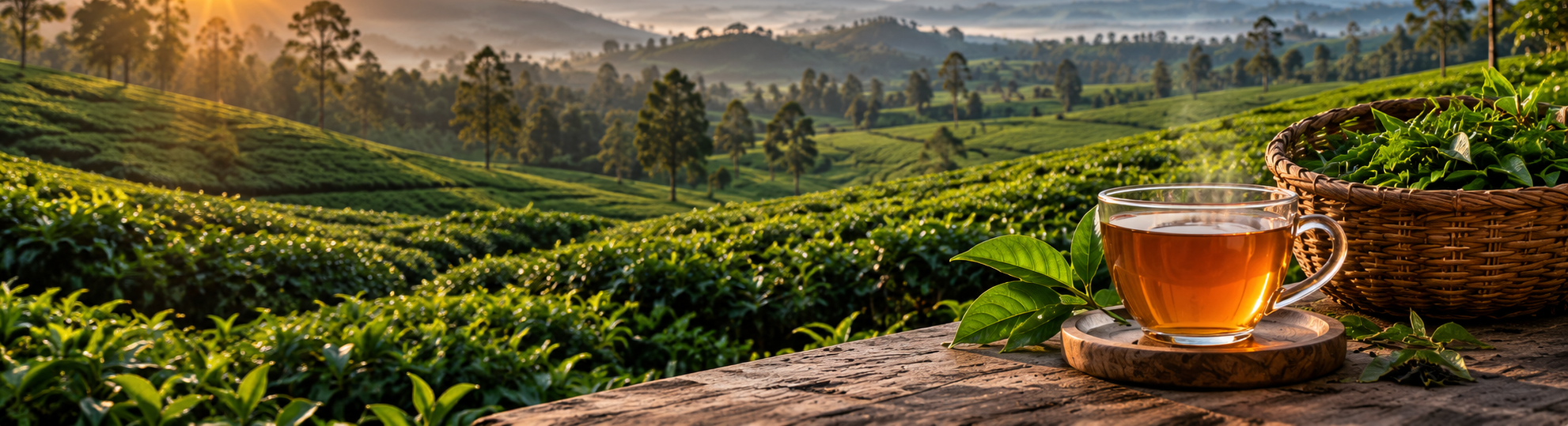
Much of Kenya’s tea is cultivated in highland areas on either side of the Great Rift Valley, broadly divided into East of the Rift Valley and West of the Rift Valley, at elevations ranging roughly from 1,500 to 2,200 metres above sea level. The eastern tea-growing areas include counties around Mount Kenya and the Aberdare ranges, while the western area includes well-known tea districts such as Kericho and Nandi.
The combination of high altitude, volcanic soil, moderate temperatures, and regular rainfall creates favourable conditions for tea cultivation. Kenya’s position close to the equator is another advantage, allowing tea plants to grow for much of the year rather than being restricted to one short production season.
If one tea style defines Kenya internationally, it is CTC black tea. CTC stands for Crush, Tear, Curl, a mechanised production method in which tea leaves are processed into small, relatively uniform particles. The method produces a tea that infuses quickly and delivers strong colour, body, and flavour. This makes Kenyan CTC particularly suitable for breakfast blends, tea bags, chai, milk tea, strong everyday black tea, and flavoured black tea blends.
Alongside CTC, orthodox tea is attracting increasing attention. It is processed more gently, allowing the leaves to retain more of their original form and develop more nuanced aromas and flavours. Depending on the garden and processing method, Kenyan orthodox black teas can show floral notes, ripe fruit, citrus-like brightness, honeyed aromas, gentle sweetness, and complex tannins.
Kenya’s diversification also includes green tea, white tea, oolong, and other speciality styles. Green teas can offer fresh and lively profiles, while oolong production remains considerably smaller. Perhaps the most distinctive example of Kenya’s innovation is purple tea. Purple tea varieties such as TRFK 306 contain high levels of anthocyanins, naturally occurring pigments responsible for purple, blue, and red colours in foods such as blueberries and blackcurrants. Its taste depends greatly on processing, but it can combine fresh, vegetal, and lightly fruity qualities with some of the structure associated with traditional tea.
Tea’s importance in Kenya is not limited to exports. It is also deeply connected to everyday life. In homes across the country, tea is associated with welcome, conversation, and hospitality. Visitors are frequently offered tea as a gesture of courtesy. A common preparation involves brewing black tea with milk and sweetening it with sugar. Ginger may also be added, creating warming tangawizi (ginger) tea. It is often enjoyed with bread, chapati, mandazi, sweet potatoes, bananas, or simply as part of an everyday meal, and it can be drunk at any time of the day.
In the cup, Kenyan black tea is typically known for brightness, briskness, strength, and consistency. A strong black tea can work beautifully alongside Assam. Assam may contribute deep maltiness and weight, while Kenyan tea can add brightness and liveliness, allowing the two origins to complement each other well in blends.
Kenya’s tea industry also faces several challenges.
Climate change is one of the most important. Irregular rainfall, drought, warmer temperatures, and extreme weather can affect both yields and growing conditions.
Price volatility is another concern, particularly for producers dependent on commodity CTC markets. International logistics and freight costs can also affect exporters, while producers must continue to respond to changing quality standards and customer expectations.
Regulation and market integrity remain important as well. The Tea Board of Kenya oversees factory and trader compliance, import controls, and surveillance against illegal dealings in tea.
Kenya’s greatest opportunity now is to ensure that the tea already enjoyed around the world is increasingly recognised for where it comes from.
Whether you are looking for premium Kenyan CTC tea, orthodox teas, or distinctive speciality teas, our goal is to bring them directly to your doorstep.